



In early 2025, Aeroplan made the biggest adjustments to its Flight Reward Chart since its relaunch in Fall 2020.
As part of the changes, you’ll find median values listed for flights with Air Canada and/or Select Partners, which include United Airlines, Etihad Airways, Emirates, Canadian regional partners, and more.
Aeroplan updates these median values on a quarterly basis, and with the latest update in effect, we can now compare what’s changed from the October 2025 and February 2026 versions of the Flight Reward Chart.
Let’s take a look to see which values have increased, which have decreased, and which have stayed the same, as well as any insights we can glean from the data.
In This Post
Aeroplan Updates Median Values on Flight Reward Chart
Understanding the Flight Reward Chart is key to determining how Aeroplan works and how to get the most out of the program.
As a reminder, Aeroplan uses dynamic pricing for redemptions on Air Canada flights, as well as for flights with Select Partners (Emirates, flydubai, United Airlines, Etihad Airways, Calm Air, Bearskin Airlines, PAL Airlines, and Canadian North). This means that the cost in points for flights with these airlines varies, whereas the cost is fixed for redemptions with other partner airlines.
As part of the March 2025 update to the Flight Reward Chart, Aeroplan introduced median values (calculated from redemptions during the previous four quarters) as a way to show more realistic expectations of what you can expect to find when you shop for flights.
At Prince of Travel, we’ve kept copies of previous iterations of the Flight Reward Chart, which we’ll use on an ongoing basis to monitor changes to median values.
Below, you’ll find charts that display the changes (if any) in median values for redemptions with Air Canada and/or Select Partners, separated by class of service.


- Earn 10,000 Aeroplan points† upon first purchase†
- Plus, earn 15,000 Aeroplan points† upon spending $3,000 in the first 90 days of account opening†
- Plus, earn an additional 20,000 Aeroplan points† on renewal when you spend $12,000 within 12 months of account opening†
- Earn 1.5x Aeroplan points† on eligible gas, groceries, and Air Canada® purchases, including Air Canada Vacations®†
- Preferred Aeroplan pricing and free checked bag on Air Canada® flights†
- Minimum income: $60,000 personal or $100,000 household
- Annual fee: $139 (rebated for the first year)
Aeroplan’s Updated Economy Median Values
| Route | Distance | Oct 2025 | Feb 2026 | Change |
|---|---|---|---|---|
| Within North America zone | 0–500 mi | 10,200 | 12,000 | +1,800 |
| Within North America zone | 501–1,500 mi | 13,600 | 13,700 | +100 |
| Within North America zone | 1,501–2,750 mi | 15,800 | 15,800 | – |
| Within North America zone | 2,751+ mi | 22,600 | 22,500 | -100 |
| Between North America and Atlantic zones | 0–4,000 mi | 40,000 | 40,000 | – |
| Between North America and Atlantic zones | 4,001–6,000 mi | 40,100 | 40,100 | – |
| Between North America and Atlantic zones | 6,001–8,000 mi | 55,000 | 55,000 | – |
| Between North America and Atlantic zones | 8,001+ mi | 67,800 | 70,000 | +2,200 |
| Between North America and Pacific zones | 0–5,000 mi | 45,000 | 50,700 | +5,700 |
| Between North America and Pacific zones | 5,001–7,500 mi | 55,000 | 55,000 | – |
| Between North America and Pacific zones | 7,501–11,000 mi | 60,000 | 60,000 | – |
| Between North America and Pacific zones | 11,001+ mi | 73,300 | 74,100 | +800 |
| Between North America and South America zones | 0–2,500 mi | 30,000 | 30,000 | – |
| Between North America and South America zones | 2,501–4,500 mi | 30,000 | 30,000 | – |
| Between North America and South America zones | 4,501+ mi | 46,800 | 45,000 | -1,800 |
Aeroplan’s Updated Premium Economy Median Values
| Route | Distance | Oct 2025 | Feb 2026 | Change |
|---|---|---|---|---|
| Within North America zone | 0–500 mi | 15,900 | 18,000 | +2,100 |
| Within North America zone | 501–1,500 mi | 22,700 | 23,200 | +500 |
| Within North America zone | 1,501–2,750 mi | 29,000 | 32,600 | +3,600 |
| Within North America zone | 2,751+ mi | 40,600 | 42,900 | +2,300 |
| Between North America and Atlantic zones | 0–4,000 mi | 74,100 | 74,200 | +100 |
| Between North America and Atlantic zones | 4,001–6,000 mi | 83,100 | 83,200 | +100 |
| Between North America and Atlantic zones | 6,001–8,000 mi | 105,600 | 107,300 | +1,700 |
| Between North America and Atlantic zones | 8,001+ mi | 113,500 | 118,700 | +5,200 |
| Between North America and Pacific zones | 0–5,000 mi | 86,400 | 94,300 | +7,900 |
| Between North America and Pacific zones | 5,001–7,500 mi | 92,600 | 95,400 | +2,800 |
| Between North America and Pacific zones | 7,501–11,000 mi | 109,100 | 100,600 | -8,500 |
| Between North America and Pacific zones | 11,001+ mi | 129,400 | 117,200 | -12,200 |
| Between North America and South America zones | 0–2,500 mi | 49,400 | 35,100 | -14,300 |
| Between North America and South America zones | 2,501–4,500 mi | 60,500 | 60,500 | – |
| Between North America and South America zones | 4,501+ mi | 74,000 | 74,000 | – |
Aeroplan’s Updated Business Class Median Values
| Route | Distance | Oct 2025 | Feb 2026 | Change |
|---|---|---|---|---|
| Within North America zone | 0–500 mi | 18,500 | 19,000 | +500 |
| Within North America zone | 501–1,500 mi | 28,500 | 29,500 | +1,000 |
| Within North America zone | 1,501–2,750 mi | 42,100 | 43,000 | +900 |
| Within North America zone | 2,751+ mi | 58,500 | 56,400 | -2,100 |
| Between North America and Atlantic zones | 0–4,000 mi | 80,000 | 107,500 | +27,500 |
| Between North America and Atlantic zones | 4,001–6,000 mi | 80,000 | 80,000 | – |
| Between North America and Atlantic zones | 6,001–8,000 mi | 113,000 | 107,900 | -5,100 |
| Between North America and Atlantic zones | 8,001+ mi | 134,900 | 110,000 | -24,900 |
| Between North America and Pacific zones | 0–5,000 mi | 159,200 | 174,000 | +14,800 |
| Between North America and Pacific zones | 5,001–7,500 mi | 100,000 | 100,000 | – |
| Between North America and Pacific zones | 7,501–11,000 mi | 100,000 | 100,000 | – |
| Between North America and Pacific zones | 11,001+ mi | 172,000 | 115,000 | -57,000 |
| Between North America and South America zones | 0–2,500 mi | 55,000 | 61,500 | +6,500 |
| Between North America and South America zones | 2,501–4,500 mi | 50,000 | 50,000 | – |
| Between North America and South America zones | 4,501+ mi | 100,000 | 104,400 | +4,400 |
Insights from Aeroplan’s Quarterly Median Value Updates
This is the third update to the median values since they were originally published in March 2025.
Personally, I find these median values useful in helping to interpret the redemption value from flights with dynamic pricing.
If I can find flights with Air Canada and/or Select Partners that price out close to the “Starting at” values or at the cost listed for other partner airlines, I know I’m getting a great deal.
In some cases, the median values are also close to the “Starting at” values, and in these cases, I know that I’m also getting a great deal if I come across flights at these prices.
Generally speaking, if you find a flight available close to the median value, you can estimate that you’re getting what most other people get for the same itinerary.
In other cases, the median values are much greater than the “Starting at” values. If this is the case for a flight that I have my eyes on – or if the cost is much higher than the median value – I’ll likely consider other options at my disposal, too.

Analyzing Changes to Economy Median Values
The biggest story in economy is the domestic short-haul squeeze: the 0–500 mile band jumped from 10,200 to 12,000 points (+17.6%), the largest percentage increase on the entire economy table. These are the bread-and-butter corridors – Toronto to Montreal, Vancouver to Calgary, Ottawa to Toronto – and as we’ll see below, this short-haul domestic pressure shows up across all three cabins this quarter.
The other notable move is transpacific: the first distance band (0–5,000 miles) climbed +5,700 points to 50,700, marking the third consecutive quarterly increase for this band. This is driven almost entirely by Air Canada flights between Vancouver and Tokyo or Osaka, and the gap between dynamic pricing and partner pricing continues to widen – the median is now 15,700 points above what you’d pay with ANA (35,000 points from Seattle or Vancouver to Tokyo), if you can find availability.
By contrast, transatlantic economy held remarkably flat – no change across three of four distance bands – and the longest South America band saw a welcome -1,800 point decrease. Economy flyers to Europe are, for now, insulated from the pricing pressure hitting domestic and transpacific routes.

Analyzing Changes to Premium Economy Median Values
Once again, the most fluctuations in median values this time around came with redemptions in premium economy.
As a reminder, premium economy Aeroplan redemptions are currently only available on Air Canada flights, though you can also combine an Air Canada premium economy flight with a flight in other classes of service with partner airlines.
In this regard, my understanding is that these values should mostly be affected by Air Canada dynamic pricing, and they aren’t as affected by pricing from other Select Partners for economy and business class redemptions.

Two clear patterns emerge from the premium economy data this time around.
First, the domestic and short-haul squeeze continues. The 0–500 mile band within North America jumped +2,100 points (+13.2%), the 1,501–2,750 mile band climbed +3,600 points (+12.4%), and the Vancouver–Japan corridor surged +7,900 points to 94,300 – now approaching the six-figure mark for what amounts to a 9-hour flight.
Second, longer transpacific routes and South America improved significantly. The biggest percentage drop on the entire chart this quarter was the first South America distance band, which plunged from 49,400 to 35,100 points (–29.0%) – a remarkable move that makes premium economy to destinations like Bogotá and Lima considerably more attractive. Meanwhile, the two longest transpacific bands fell 8,500 and 12,200 points respectively, benefiting routes to Australia, New Zealand, and Southeast Asia.
In short: if you’re flying premium economy on Air Canada, short-haul domestic and Japan are getting more expensive, while longer-haul Pacific routes and South America are moving in the right direction.
Whenever I’m looking at Air Canada flights with Aeroplan, I always consider the options in premium economy, since I know I’ll have the best chance at clearing the eUpgrade waitlist if I’m booked in premium economy to begin with.
In the past year or so, I’ve been successful on booking in premium economy and flying in business class by way of premium economy Aeroplan redemptions and eUpgrades from Vancouver to Osaka, Vancouver to Manila, Montreal to Vancouver, and numerous flights between Vancouver and Toronto.
This will continue to be my strategy in 2026 and beyond.
Analyzing Changes to Business Class Median Values
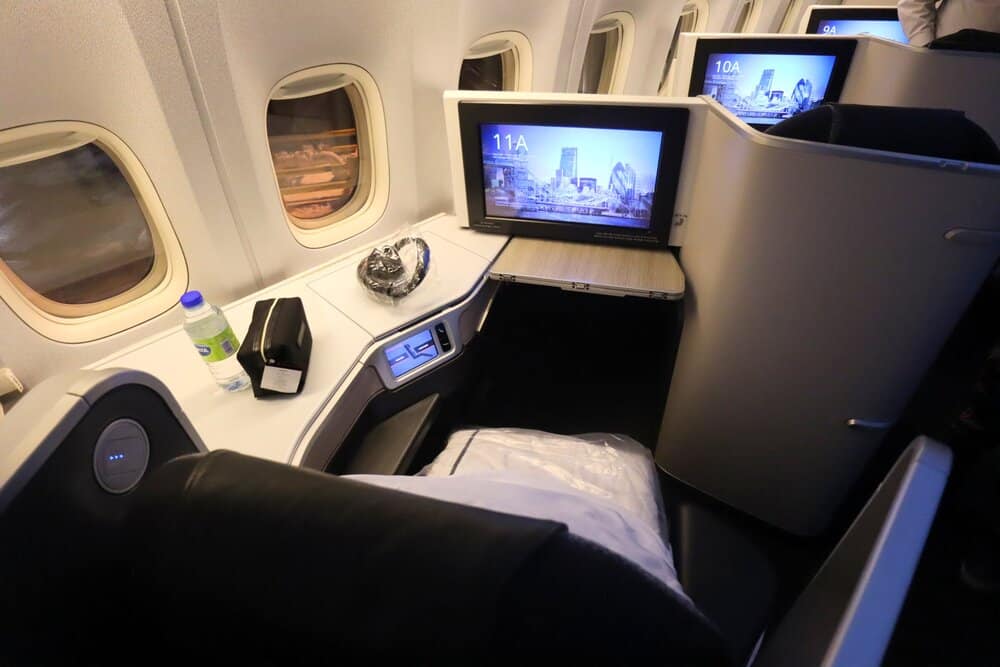
Business class is where the most dramatic moves happened this quarter, and the transatlantic data tells a fascinating story of divergence.
The first transatlantic distance band (0–4,000 miles) surged from 80,000 to 107,500 points (+34.4%) – the largest absolute increase on the entire chart at +27,500 points. This band covers the most popular Canadian routes to Europe – Toronto and Montreal to London, Paris, Frankfurt, and Lisbon – and the increase suggests Air Canada is pricing these high-demand trunk routes aggressively.
But here’s what makes it interesting: the longer transatlantic bands moved in the opposite direction. The 8,001+ mile band dropped 24,900 points to 110,000 and the 6,001–8,000 mile band fell 5,100. That’s a 52,400-point swing between the cheapest and most expensive movements within the same region and cabin. The likely explanation is that less competitive long-haul routes with more partner availability naturally see lower dynamic pricing, while the popular trunk routes are being squeezed.

What stands out the most to me this time around is that flights within the first distance band (0–5,000 miles) on the “Between North America and Pacific zones” section of the Flight Reward Chart have seen increases to the median values in all classes of service, for the third consecutive quarter.
Again, my understanding is that this is largely driven by Air Canada redemptions between Vancouver and Tokyo/Osaka, as most other transpacific itineraries fall within the second, third, or fourth distance bands.
Indeed, this distance band is where we see the biggest discrepancy between the “All other partners” pricing and the “Air Canada and/or Select Partners” pricing on the entire Flight Reward Chart. With business class, the gap has now reached more than 3x: partner pricing with ANA sits at 55,000 points (if you can find availability), whereas the median on Air Canada flights is 174,000 points. A year ago, these median values didn’t exist – now they make the premium starkly visible.
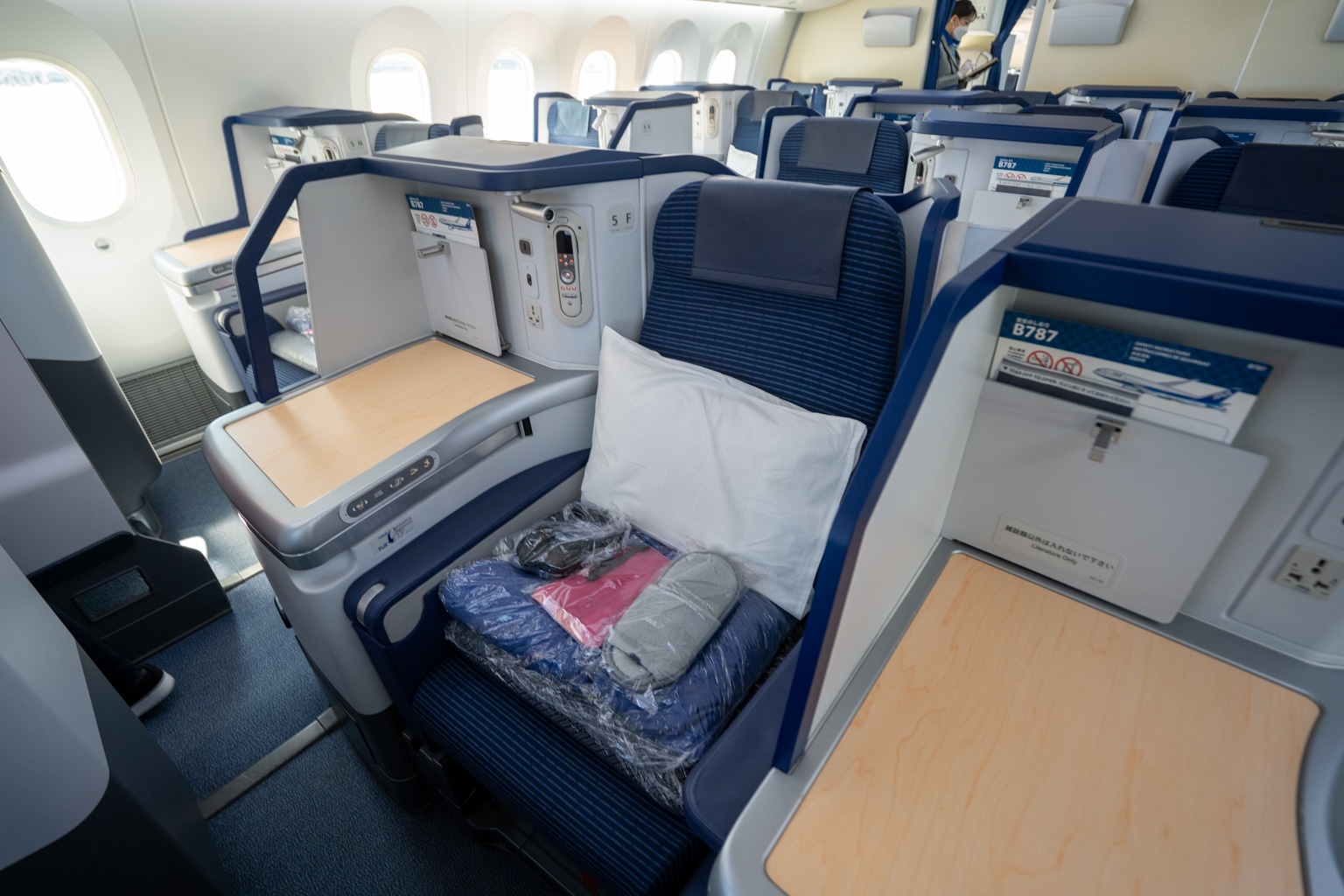
On the bright side, the longest Pacific band (11,001+ miles) saw business class medians plunge from 172,000 to 115,000 points (–33.1%) – the largest percentage drop on the chart. Routes to Australia, New Zealand, and Southeast Asia via partner connections are considerably cheaper than last quarter.
If you have your heart set on visiting Japan, you may have better luck taking the long-way around via Europe (with better partner award availability), or by setting your sights on other destinations in Asia (such as Manila) and then heading to Japan on a regional flight (with greater award availability).
Conclusion
Aeroplan has published the latest quarterly changes in median values for redemptions with Air Canada and/or Select Partners on the Aeroplan Flight Reward Chart.
As you might expect, many values remained the same or had minor changes, while others showed a more notable increase or decrease in pricing.
We’re expecting the next update to happen around mid-2026, and we’ll be sure to update this article with new insights when the time comes.